
A residential move in Raleigh goes smoothly when you decide early what kind of move you’re making, work backward from a fixed date, and prepare your home so moving day is only about moving. That is the whole strategy. The rest of this guide shows you how to do it, from the first decision to your first week in the new place.
This guide is for anyone moving a house or apartment in Raleigh, whether across town, to a nearby Triangle city like Cary, Apex, or Durham, or out of state. If you’re researching how residential movers in Raleigh work, what a typical move involves, and how to avoid the usual problems, you’re in the right place. You’ll find a planning timeline, packing advice, tips for apartments and houses, local factors that affect Raleigh moves, and a list of common mistakes.
Step One: Decide What Kind of Move You’re Making
Before you pack a box, define the move. Nearly every other decision, from how much time you need to how much you’ll pack yourself, depends on it.
Local moves within Raleigh and the Triangle
A local move stays within the Raleigh area, such as from a North Raleigh townhome to a house in Garner or from a downtown apartment to a place near NC State. Local moves are usually planned around the time and labor required. The distance is short, but the workload is not always small. Stairs, long carries from the truck to the door, a full garage, and a large household all add up.
If you’re researching local residential movers in Raleigh, compare the work your move involves, not just the mileage. A short drive with a packed four-bedroom house can take more effort than a longer drive with a half-empty one-bedroom.
Long-distance moves out of Raleigh
A long-distance move crosses a larger distance, often out of state. These moves need more lead time because scheduling, route planning, and delivery windows are more involved, and there is more to coordinate on both ends. Long-distance residential moves also tend to reward a more aggressive purge before packing, because you’re moving everything a long way and the volume of your belongings affects the job.
If you’re weighing local against long-distance, the main differences to consider are:
- Lead time: long-distance moves need more planning.
- Timing flexibility: local moves often fit a single day, while long-distance moves involve transit time and delivery coordination.
- Decluttering: the farther you go, the more it pays to move only what you’ll actually use.
- Logistics at both ends: you’ll coordinate access, parking, and timing in two places instead of one.
Apartment moves
Apartment moves come with their own rules. Many complexes have elevator reservations, loading dock or loading zone limits, designated moving hours, and requirements about where a truck can park. Contact your property manager early, both at your current place and the new one, and ask what they require. A move that looks simple on paper can stall if the elevator isn’t reserved or the truck can’t get close to the building.
House moves
House moves add volume and extra spaces: a garage, attic, shed, outdoor furniture, and sometimes a basement or workshop. These areas are easy to forget in your estimate of how much you own, and they’re often where a move grows larger than expected. Walk through every storage area before you plan, not just the main living spaces.
Build Your Moving Timeline
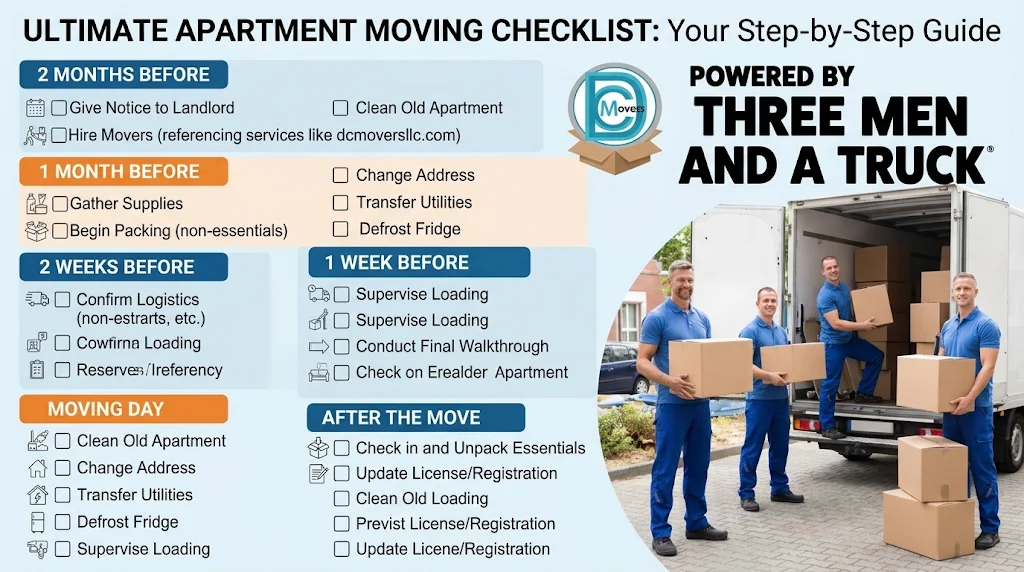
You don’t need a rigid schedule, but you do need a sequence. Here is a practical timeline you can adapt. If your move is sooner than eight weeks away, compress the steps rather than skip them.
Six to eight weeks before moving day
Set your moving date as firmly as you can, and confirm your new place’s availability. Start gathering information on moving services now rather than later. This is also when you should do your first honest inventory. Walk through each room and ask what’s coming, what’s being sold or donated, and what’s being thrown away.
Decide whether you’ll handle the packing yourself, have help, or split it. Also ask your current and new property managers or HOA about any move-in and move-out rules.
Four to six weeks before
Begin decluttering in earnest. Start with areas you rarely use, such as the garage, the attic, guest rooms, and closets. Get packing supplies: sturdy boxes in a few sizes, packing paper, tape, markers, and protective wrap for fragile items.
If you’re going to work with a moving company, this is a good point to book. Finalizing your date early is especially helpful if you’re moving at the end of the month, on a weekend, or in summer, when many people are moving at once.
Two to four weeks before
Start packing the things you use least. Submit your change of address, and arrange to transfer or set up utilities like electricity, water, internet, and trash service at the new address. Notify your bank, insurer, employer, and any subscriptions or memberships. Schedule any cleaning, repairs, or touch-ups you need.
The final week
Pack the rest of your belongings, leaving out only daily essentials. Confirm the details of moving day, including arrival window, access, parking, and any elevator reservations. Defrost the freezer if you’re moving it. Prepare a bag of essentials for each person.
The day before
Finish packing, disassemble what needs disassembling, and clear pathways. Charge your phone, gather important documents, and set aside anything that travels with you instead of on the truck, such as medications, valuables, documents, and keys.
Local Factors That Affect Moving in Raleigh
Moving anywhere has common principles. A few Raleigh-area conditions are worth planning around, though.
Summer heat and humidity: Raleigh summers are hot and humid. Heat affects how long people can comfortably carry heavy items outside, and it matters for belongings sensitive to temperature, like electronics, candles, certain medications, plants, and some wood furniture. If you can choose your date, an earlier start to the day can make a hot-weather move more comfortable. Keep water available for everyone helping.
Rain and thunderstorms: Pop-up storms happen in the area, especially in warmer months. Have a plan for protecting furniture and boxes when moving from house to truck. Clear walkways can also get slippery, so sweep and dry entry paths when you can.
Spring pollen: Pollen season is a familiar part of life in the Raleigh area. If you or anyone in your household has allergies, consider keeping windows closed on moving day where possible and wiping down surfaces when you arrive.
Traffic patterns: Raleigh has busy corridors, including around the Beltline and major routes into and out of the city. Rush-hour congestion and event traffic can add time to a move, particularly if you’re crossing town. When you plan your timing, think about when you’ll be loading, driving, and unloading in relation to peak traffic.
Lease cycles and the academic calendar: With a large student population and a steady stream of new residents, certain times of year tend to be busier for moves. If your date is flexible, a mid-month or midweek move can make scheduling easier than a crowded end-of-month weekend.
HOA and apartment rules: Many neighborhoods and communities have their own rules about moving hours, truck parking, and use of common areas. Checking early avoids surprises on moving day.
Sort and Declutter Before You Pack
The cheapest, easiest item to move is the one you don’t bring. Decluttering reduces packing time, lowers the number of boxes, and makes the new home feel less chaotic on day one.
Go room by room and sort items into four groups: keep, sell, donate, and discard. Be realistic. If you haven’t used something in a year and have no specific plan for it, it’s a candidate to go. Don’t forget hazardous household items such as paint, propane tanks, cleaning chemicals, and similar products, which movers commonly can’t or won’t transport. Check your local waste and recycling guidance for how to dispose of them properly.
If you’re moving a full household, decluttering has a real practical effect. Fewer items typically means less loading time and a more manageable move overall.
How to Pack for a Residential Move
Packing is where many people lose the most time, so it helps to be systematic.
What to pack first
Start with the things you use least: off-season clothing, decor, books, spare linens, rarely used kitchen items, and anything in storage. Save daily-use items for the last day or two. A good rule is to work from the least essential room to the most essential, so the kitchen and bedrooms come last.
Packing techniques that protect your belongings
- Use the right box for the item: Small boxes for books and heavy items, larger boxes for lighter items like linens.
- Don’t overpack: A box that is too heavy is hard to carry and more likely to fail.
- Fill space: Use packing paper or soft items so contents don’t shift.
- Wrap fragile items individually. Plates can be packed on their edge rather than flat.
- Keep sets together: Screws, hardware, and small parts from disassembled furniture should be bagged, labeled, and kept with the piece or in a designated box.
- Photograph electronics setups: A quick photo of how cables connect saves time later.
Labeling that actually helps
Label each box with the destination room and a short description of the contents. Labeling the top and at least one side makes boxes easy to read when stacked. Consider marking boxes you need first with a distinct color or label. A clear system means that on the other end, everything lands where it belongs without you needing to open each box.
The “first night” box
Pack a box or bag you’ll carry yourself with the things you’ll need right away: toiletries, a change of clothes, phone chargers, medications, basic tools, towels, sheets, a few kitchen essentials, pet supplies, and important documents. This saves you from digging through boxes at the end of a long day.
Prepare Your Home or Apartment for Movers
Whether you’re working with a professional crew or with friends, preparing the space makes the actual move faster and safer.
Clear the pathways: Remove clutter from hallways, stairs, and entryways. Move loose rugs that could cause a trip. Open doors fully and, if possible, prop them open.
Plan for parking and access: The truck needs a place to park reasonably close to the entrance. At houses, that may mean clearing the driveway or checking street access. At apartments, it may mean reserving a loading zone, a dock, or an elevator. Confirm details with your property manager in advance.
Disassemble and prepare large items: Beds, tables, and similar furniture may need to be taken apart. Drain and prepare appliances according to their instructions, and empty and unplug refrigerators and freezers in advance.
Keep valuables with you: Jewelry, important documents, cash, laptops, and irreplaceable items should travel with you.
Protect your floors and doors: If you’re concerned about scuffs or scratches, floor protection and door-frame padding can help. Ask whether your movers provide these.
Know what you want to move: Mark anything that’s staying, such as items left for the next resident, so nothing gets loaded by mistake.
What to Expect on Moving Day
Knowing the flow of a typical moving day reduces stress. While every move is different, the general sequence looks like this.
The crew arrives within the scheduled window. You or a designated person walks them through the space, pointing out fragile items, items that aren’t going, and anything requiring special care. They’ll protect and wrap furniture, load the truck in an organized way, and transport your belongings. At the new home, they unload and place furniture and boxes where you direct.
Stay available during the move. Even if you’ve planned well, small questions come up: where does this go, is this box fragile, do you want the bed reassembled now? A quick final walkthrough of the old place, including closets, cabinets, the garage, and attic, helps make sure nothing gets left behind.
How long does a residential move take?
There is no single answer, because duration depends on the size of the home, the amount of belongings, how well you’ve packed, the number of stairs, distance between locations, parking and elevator access, and traffic. A small apartment may take a few hours, while a larger house may take most of a day or longer. A long-distance move adds transit time on top of loading and unloading. The best way to get a realistic estimate is to describe your specific situation, including access and the number of items, to the company you’re talking with.
How much can movers move?
In general, professional movers can transport the contents of a full household, including furniture, boxes, appliances, and similar items, depending on truck capacity and the scope of the job. The better question is usually what they will not move. Companies commonly exclude hazardous materials, flammable items, perishable food in some cases, and certain valuables. It’s a good idea to ask about restrictions ahead of time so you aren’t surprised on the day.
Common Residential Moving Mistakes to Avoid
Most moving stress comes from a handful of avoidable errors.
Starting too late: Packing always takes longer than expected. Begin earlier than feels necessary.
Underestimating how much you own. The garage, attic, shed, and closets hold more than you think. Inventory every space.
Skipping the declutter: Moving unwanted items costs you time, effort, and space.
Not confirming access details. Elevator reservations, parking, gate codes, and HOA rules are easy to overlook and hard to fix on the day.
Packing without a system: Unlabeled boxes and mixed-room packing make unpacking slow.
Leaving essentials in the truck. Medications, chargers, documents, and basic toiletries should stay with you.
Waiting to set up utilities: Schedule service so you arrive to working power, water, and internet.
Ignoring weather. In Raleigh, heat, rain, and humidity are real considerations. Have a plan for protecting your belongings and keeping everyone comfortable.
Not reading the terms: If you’re working with a moving company, read what’s included, how the job is scoped, and what happens if plans change, and ask questions before moving day.
Tips for Moving Into Your New Home
The move isn’t over when the truck is empty. A little structure in the first days helps you settle in faster.
Start with the essentials: beds, bathrooms, and the kitchen basics. Unpack the first-night box, then work through priority rooms. Inspect your belongings for any damage as you unpack, and note it promptly. Check that utilities are working, locate the breaker panel and water shut-off, and update your address with remaining services.
If you’re in an apartment, introduce yourself to the property manager and confirm trash, parking, and package rules. If you’re in a house, walk the property and note anything that needs attention. Changing or rekeying locks is a common first-week task, since you don’t always know who has copies of old keys.
When Professional Moving Help Makes Sense
Some moves suit a do-it-yourself approach, especially small apartment moves with little furniture. Others benefit from professional help, particularly when there are stairs, heavy or bulky items, a tight schedule, a long distance, physical limitations, or simply a large household.
If you decide to work with a moving company, look for clear communication, a written description of what’s included, and answers to your specific questions about access, restrictions, and scheduling. You can also verify a mover’s licensing and registration. Moves within North Carolina and moves between states are regulated differently, so it is reasonable to ask which applies to you and what credentials the company holds.
If you’d like to see what a full-service option looks like, you can read about residential moving services in Raleigh from DC Movers, which covers house, apartment, and household moves.
Conclusion
Planning a residential move in Raleigh comes down to a few consistent habits: choose your move type early, build a timeline, declutter before you pack, label carefully, prepare your space for access, and plan around local conditions like summer heat, storms, and traffic. Do these things and moving day becomes a matter of execution rather than problem-solving.
If you’d like help with a house, apartment, or household move in the Raleigh area, call DC Movers at (919) 519-1715 to talk through your plans.
FAQs
How early should I schedule residential movers?
As early as your date is firm. Several weeks ahead is a reasonable baseline for a typical local move. Allow more lead time for long-distance moves, end-of-month dates, weekends, and summer, when demand tends to be higher.
What should I do before moving to a new home in Raleigh?
Confirm your move date, sort and declutter, gather packing supplies, arrange utilities, update your address, and check any moving rules set by your apartment community or HOA. Then pack in stages and prepare your home for access on moving day.
What is the difference between local and long-distance residential moving?
A local move stays within the same general area, while a long-distance move crosses a greater distance, often state lines. Long-distance moves usually require more planning and coordination, and they involve additional transit and delivery considerations.
How do I prepare an apartment for movers?
Reserve the elevator or loading zone if required, confirm parking for the truck, clear hallways and doorways, disassemble large furniture, and keep valuables and essentials with you. Contact your property manager early, since rules vary by community.
What should I pack first when moving house?
Start with items you use least: seasonal belongings, decor, books, spare linens, and storage areas. Leave daily essentials for the final days.
Should I be home during the move?
Yes, or have a trusted person there. You’ll want someone to direct placement, answer questions, and do a final walkthrough.