
You already rented the truck. Now you need hands, not headaches. That’s the exact moment most people start searching for moving labor services in Washington, DC, and it’s a smarter move than it sounds. A truck rental gets you the vehicle. It doesn’t get you a team that knows how to carry a dresser down a spiral row house staircase without scraping the wall, or how to reserve a freight elevator in a Navy Yard high-rise before your building’s management office closes for the day.
This guide walks through what moving labor actually includes, why Washington, DC’s housing stock makes this kind of service different from a suburban move, what it costs by the hour, and how to pick a crew you can actually trust with your belongings. Along the way, we’ll answer some of the most common questions people ask before booking, including what a veterans moving labor service is and how local hourly pricing tends to work.
What Are Moving Labor Services, Exactly?
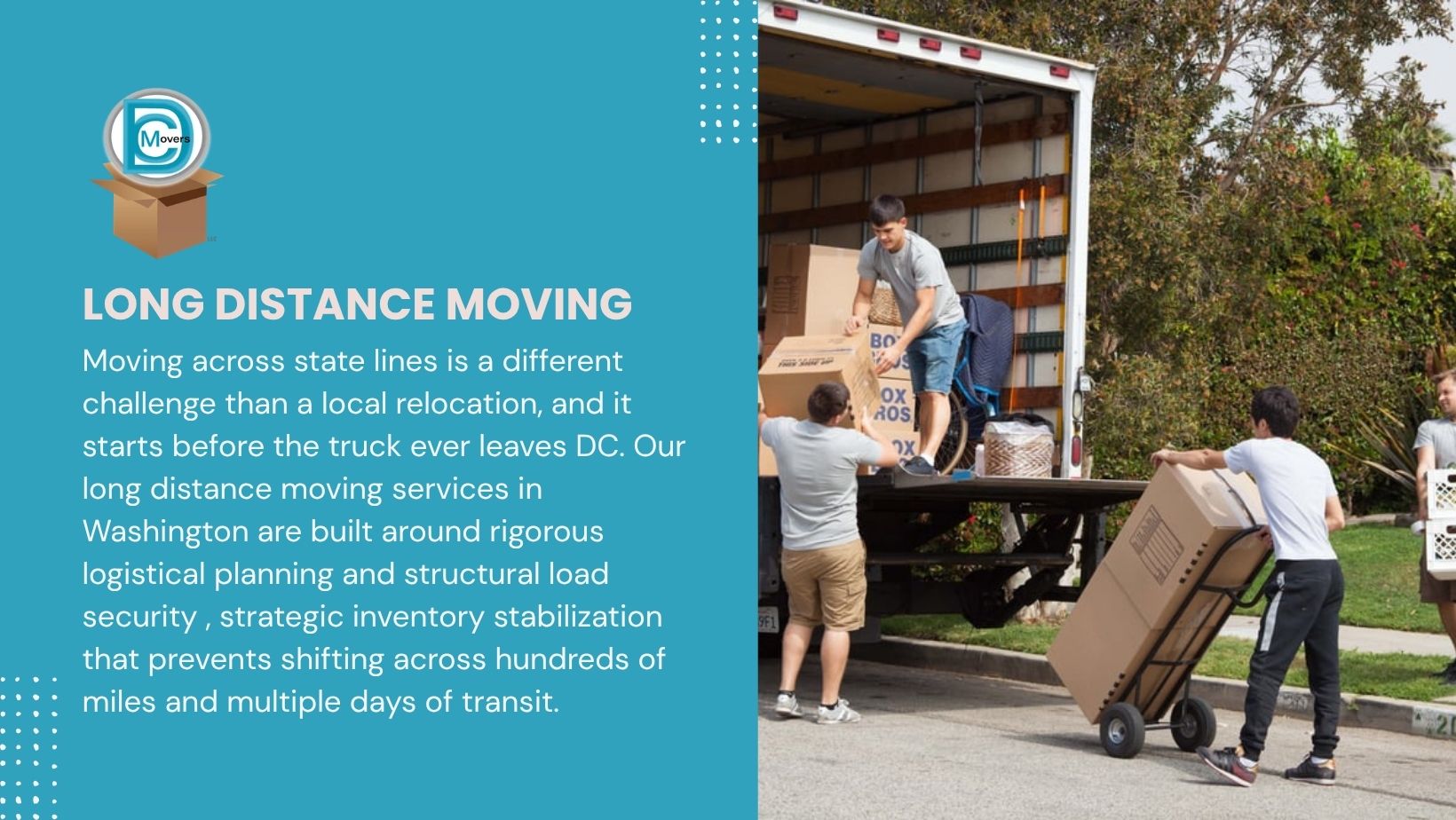
Moving labor is the physical part of a move, separated from the transportation part. You handle the truck, whether that’s a rental, a friend’s pickup, or your own cargo van, and a professional crew handles the loading, the unloading, or both. It’s the option for people who don’t want to pay for a full end-to-end moving company but also don’t want to throw out their back carrying a couch down three flights of stairs.
This is different from hiring a couple of guys off a classifieds site or an app that connects you with independent gig workers. A proper moving labor company sends employees, not strangers pulled from a marketplace. That distinction matters more than most people realize until something goes wrong. Employees carry workers’ compensation coverage through their employer. Gig workers on some labor apps may not, which can leave you exposed if someone gets hurt in your home.
In Washington, DC specifically, moving labor services usually include:
- Loading your rented truck, moving container, or personal vehicle
- Unloading at your new address
- Furniture disassembly and reassembly (beds, shelving units, sectional couches)
- Wrapping and padding furniture to prevent transit damage
- Stair carries and tight-doorway navigation
- Strapping and securing the load inside the truck bed

Why Washington DC Movers Need a Different Kind of Labor Crew
A crew that’s great at moving a single-story ranch house in the suburbs can genuinely struggle in the District. DC’s housing and commercial real estate come with quirks that don’t show up in a lot of other markets, and they change how a labor job actually gets done.
Row Houses, Walkups, and Tight Stairwells
Capitol Hill, Petworth, Bloomingdale, and dozens of other DC neighborhoods are built around narrow row houses with steep, winding interior stairs. A queen mattress or an armoire that would move easily in a wide suburban hallway can turn into a genuine puzzle in a 100-year-old row house. Crews who work DC regularly know how to angle furniture through tight turns, when to remove a door from its hinges instead of forcing a couch through it, and how to protect original hardwood floors and plaster walls that a landlord or condo board will absolutely notice if damaged.
Loading Docks, Alley Access, and Building Rules
Newer DC buildings, especially the high-rises around Navy Yard, NoMa, and the Wharf, often require advance scheduling for freight elevators and loading docks. Show up without a reserved time slot, and your crew could be stuck waiting in a hallway instead of working, which burns your labor hours for nothing. Experienced local crews know to ask about building move-in requirements before the job even starts, not after they’ve already arrived.
Parking Permits and DPW Regulations
Curbside parking in much of DC is tightly controlled, and double-parking a rental truck outside a row house for two hours can get it ticketed or towed if you’re not careful. Crews familiar with the District know which blocks require temporary no-parking permits from DC’s Department of Public Works and how far in advance those need to be requested, which is the kind of detail that saves a move from turning into a parking citation.
What’s Included in a Professional Moving Labor Booking
Not every “moving help” company operates the same way, and the differences show up on move day. A well-run moving labor booking typically covers the following, and it’s worth confirming each item before you hand over a deposit:
- A crew sized appropriately for your inventory (two movers for a studio, three or more for larger homes or heavy items)
- Basic equipment: furniture dollies, hand trucks, moving straps, furniture pads, and floor runners
- Disassembly and reassembly of beds, tables, and modular furniture at no extra charge
- Protective wrapping for mirrors, glass tabletops, and electronics
- A crew lead who communicates directly with you about timing and any obstacles on-site
- Proof of licensing and insurance you can verify before booking
What’s usually not included, and worth asking about upfront, is packing materials themselves (boxes, tape, bubble wrap) unless you specifically add a packing service, and long-carry fees if the truck has to park unusually far from the entrance.

How Much Does It Cost Hourly for Moving Labor Services?
This is one of the most searched questions on the topic, and it deserves a straight answer instead of a vague “it depends.”
Hourly moving labor rates in the Washington, DC area generally fall somewhere between $100 and $180 per hour for a two-person crew, with three-person crews running higher, often in the $150 to $230 per hour range. Most companies set a minimum booking window, commonly two hours, since a crew still has to travel, unload equipment, and get oriented to your space even for a small job.
Several factors move that number up or down:
- Crew size. More movers means a faster job but a higher hourly rate.
- Stairs and access. A third-floor walk-up with no elevator takes longer than a ground-floor unit, and that time adds up.
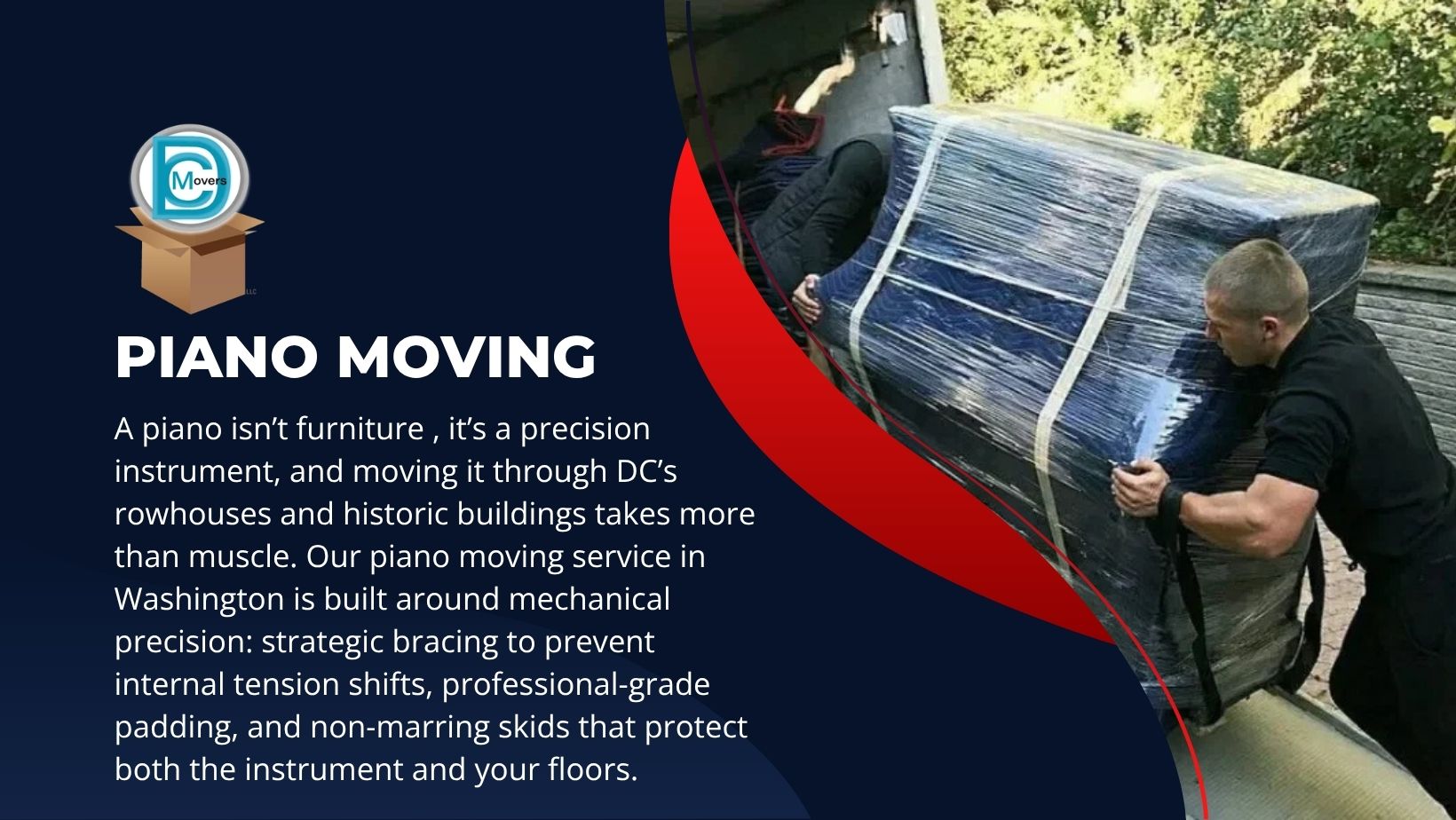
- Heavy or oversized items. Pianos, gun safes, and large appliances often require specialized handling and sometimes an additional crew member.
- Distance from the truck to the door. If a truck can’t park close to the entrance, carries take longer.
- Day and time. Weekend and end-of-month bookings, which are the busiest days in DC’s rental market, sometimes carry a premium due to demand.
- Flat-rate versus hourly. Some companies offer flat-rate pricing based on inventory instead of an open-ended hourly clock, which can be worth it if you want cost certainty over a busy building with slow elevators.
A studio apartment unload with no stairs might realistically run two to three hours. A three-bedroom row house with a steep staircase can easily run five hours or more. Getting a walk-through quote, even a phone-based one where you describe your inventory and building access, is the only way to get a number that actually reflects your move.
What Is a Veterans Moving Labor Service?
A veterans moving labor service generally refers to one of two things, and the phrase gets used both ways depending on the company. First, it can mean a moving labor company that’s veteran-owned or staffed largely by former military service members, which some customers specifically look for because of the discipline, punctuality, and physical training that military service tends to instill. Second, and more commonly, it refers to moving companies that offer a veteran discount or reduced-rate labor package for active-duty service members, veterans, and their families, often as a way of giving back to a community that moves more frequently than the average household due to duty station changes and permanent change of station (PCS) orders.
Either way, the core idea is the same: labor crews who understand that military families often move on tighter timelines, sometimes with less notice, and sometimes into or out of government housing with its own specific building rules.
What Is a Veterans Moving Labor Service in Washington, DC?
Washington, DC has one of the highest concentrations of active-duty personnel, veterans, and government-adjacent workers of any city in the country, thanks to the Pentagon, Joint Base Anacostia-Bolling, the Navy Yard, and dozens of federal agencies headquartered in the District. A veteran moving labor service in this specific market usually means a local crew that’s familiar with military housing move-in requirements, understands PCS timelines, and can work around the compressed scheduling that often comes with military orders. Some DC-area moving labor companies extend a veteran or military discount on hourly labor rates as a standard policy, so it’s always worth asking directly when you request a quote whether that applies to your booking.
Moving Labor vs Full-Service Moving: Which Do You Need?
This is the fork in the road most people hit before they book anything. Moving labor makes sense when you already have transportation sorted out, whether that’s a rental truck, a moving container like a PODS unit, or your own vehicle, and you just need trained hands for the heavy lifting. It tends to cost less than a full-service move because you’re only paying for labor, not for the truck, fuel, and mileage.
Full-service moving makes more sense when you don’t want to deal with any part of the logistics: no truck rental, no route planning, no separate insurance for the vehicle. You’re paying for the entire chain, from packing to transport to unloading, handled by one company from start to finish.
A good rule of thumb: if you’re comfortable driving a 15- or 20-foot rental truck and just dread the physical labor and lifting, moving labor alone is usually the more economical choice. If the idea of coordinating a rental truck, parking permits, and driving through DC traffic sounds like its own project, full-service is probably worth the extra cost.
How to Choose the Right Moving Labor Company Near You
Searching “moving labor near me” returns a long list of options, and not all of them are equal. A few checkpoints separate a dependable crew from a risky one:
- Verify licensing and insurance. Ask for a USDOT number or state moving license and confirm the company carries workers’ compensation coverage. This protects you if a mover is injured in your home.
- Confirm it’s employees, not a gig marketplace. Ask directly whether the crew is made up of full-time staff or independent contractors booked through an app. Employee-based crews tend to have more consistent training and accountability.
- Ask about DC-specific experience. A crew that’s regularly worked row houses, high-rises, and DC’s parking rules will move faster and cause fewer surprises than one unfamiliar with the District.
- Get pricing in writing. Whether it’s hourly or flat-rate, get the number, the minimum booking window, and any potential add-on fees before move day.
- Check reviews for consistency, not just star ratings. Look for repeated mentions of punctuality, careful handling, and clear communication, not just a high average score.
- Ask what happens if something is damaged. A legitimate company will have a clear claims process, not a vague promise.
Tips to Prepare for Your Moving Labor Appointment
A little prep work goes a long way toward keeping your hourly labor cost down, since crews are billing for time, and time spent waiting on you to finish packing is time you’re paying for.\
- Finish packing boxes before the crew arrives; labor time is for lifting and loading, not last-minute packing.
- Disassemble anything you’re comfortable taking apart yourself, or flag it clearly for the crew.
- Clear walkways, stairwells, and doorframes of obstacles ahead of time
- Reserve elevators or loading docks in advance if your building requires it
- Have parking arranged for the truck as close to the entrance as possible
- Set aside essentials (medications, chargers, important documents) in a bag that travels with you, not the truck
- Confirm your DC parking permit if your street requires one for a moving truck
Booking Your Moving Labor Crew in Washington, DC
Once you know your move date, truck size, and the number of stairs or flights at each address, booking moving labor services in Washington, DC is a short conversation, not a long process. A reputable local company will ask about your inventory, your building’s access rules, and whether you need loading only, unloading only, or both, then give you a straight quote based on that information rather than a vague estimate.
Same-day and short-notice bookings are common in a city where leases often turn over at the end of the month, so it’s worth calling directly rather than relying only on a web form if your timeline is tight. Whether you’re moving out of a Capitol Hill row house, into a Navy Yard high-rise, or relocating a small office downtown, the right crew treats a labor-only job with the same care and professionalism as a full move, because for a company that does both, it genuinely is the same team either way.
FAQ’s
What is a veterans moving labor service?
It’s a moving labor company that’s veteran-owned or veteran-staffed, or one that offers discounted labor rates to active-duty service members, veterans, and their families. The term covers both meanings depending on the company, so it’s worth asking directly what a specific provider offers.
What is a veterans moving labor service in Washington, DC?
In DC specifically, it usually means a local crew familiar with military housing requirements and PCS timelines, given the city’s large population of active-duty personnel and federal workers. Some DC moving labor companies also extend a standard veteran or military discount on hourly rates.
How much does it cost hourly for moving labor services?
In the Washington, DC area, hourly rates typically range from about $100 to $180 for a two-person crew, and $150 to $230 for a three-person crew, with most companies setting a two-hour minimum. Stairs, access, and heavy items can push the total time and cost higher.
What’s the difference between moving labor and full-service moving?
Moving labor covers loading and unloading only, with you providing the truck. Full-service moving includes the truck, transport, and driving in addition to the labor. Labor-only is generally the cheaper option if you’re comfortable handling the logistics yourself.
Do I need a permit to load a moving truck in DC?
Some DC blocks require a temporary no-parking permit from the Department of Public Works if you need a moving truck to occupy curb space for an extended period. It’s worth checking with your building or the DPW ahead of move day, especially in dense row house neighborhoods.
Can moving labor companies help with a piano or other heavy items?
Most professional moving labor crews can handle pianos and other heavy specialty items, but it typically requires specific equipment like skids and harness systems, and sometimes an additional crew member. Mention any heavy items when booking so the right team and tools are scheduled.